
The Summer Your Tourism Ads Turned Pretty Emotional
If you have spent any time around pop culture over the past couple of years, you will recognise the headline play on The Summer I Turned Pretty. But when it comes to New Zealand tourism marketing, our collective reliance on "pretty" has actually become a bit of a practical problem.
With the warmer months approaching, now is the ideal time for New Zealand operators to prepare their tourism advertising campaigns and review their conversion funnels for the upcoming summer season.
The Tourism Operator’s Marketing Challenge
If you are currently refining your tourism marketing strategy or sitting down with an ad agency to build out creative assets, you have likely run into a common industry challenge: most tourism advertising looks similar.
Whether you run a boat tour, guided walks, or a boutique lodge, your competitors down the road often have access to similar mountain backdrops, native bush, and coastlines.
When your tourism digital marketing looks like everyone else's, prospective visitors default to comparing price and proximity. Competing on price alone creates an unnecessary race to the bottom that shrinks your margins.
The heart almost always wins, especially on holiday
Why Emotion Is Your Best Differentiator
Most people are booking paid experiences to fulfill one of their emotional needs or desires.
Shifting your messaging from what you offer to also convey how it feels is one of the most effective ways to strengthen your tourism brand. Emotion creates better recall, reduces price sensitivity, and gives visitors an intangible reason to choose your business over a competing operator.
Core Emotional Angles in Tourism Marketing
When building creative messaging, generic phrases like "great value fun!" rarely resonate. Consumer psychology shows that distinct emotional states drive different buying decisions. Effective destination marketing campaigns usually anchor to one of these evidence-based emotional drivers:
Awe (Self-transcendent cognition): Studies in affective psychology identify awe as the perceptual expansion when encountering something vastly greater than oneself—like standing before a glacier or under a dark sky reserve. It slows perceived time and deepens engagement.
Mirth (Psychological relief): Social psychology classifies mirth as the emotional response to dry wit or playful incongruity. Using lighthearted amusement lowers a prospect's analytical objection (eg. “maybe this is too adventurous for me!”), gets cut through and builds immediate rapport.
Flow & Mastery (Optimal engagement): Grounded in positive psychology, this state occurs when a challenge matches high personal skill. For adventure tourism, it delivers the psychological reward of focus and mastery such as a sense of achievement after caving, climbing a mountain, or ziplining.
Relational Belonging (Social attachment): Driven by our fundamental need for connection, this angle centres on deepening bonds or experiencing authentic, culturally grounded hospitality through manaakitanga.
Recovery (Psychophysiological restoration): Attention Restoration Theory demonstrates how natural environments relieve cognitive fatigue. This focuses on the physical release of tension—unplugging in a rural setting or soaking in a thermal pool.
Real-World Examples That Work
Oh how I wish I worked on this campaign!
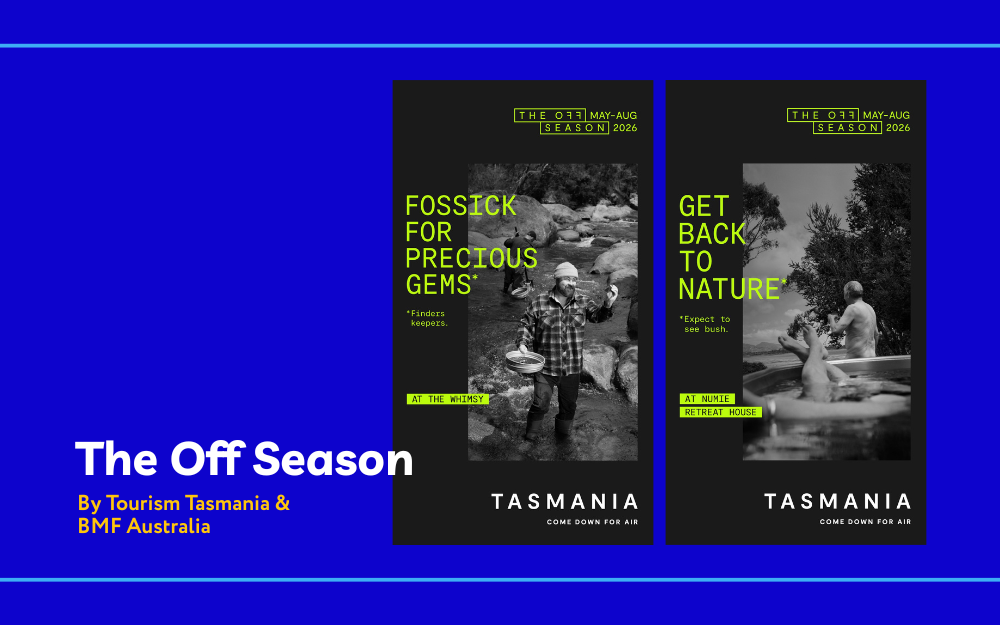
Tourism Tasmania ("Come Down for Air" and "Off Season")
Instead of competing with traditional sunshine-and-beach tropes, Tourism Tasmania built their strategy around specific emotional problems: urban travellers needing relief from daily stress, and winter visitors looking for distinctive experiences. Through their year-round platform and winter "Off Season" campaigns, they leaned heavily into mirth, dry humour, moody weather, and wood-fired saunas. They sold permission to slow down and laugh at the absurdities of winter rather than pushing a standard checklist of sight-seeing spots.
Where to Begin Your Summer Planning
If you are pulling together your tourism marketing plan and need to identify your primary emotional angle, start with one of these three foundations:
Brand personality: Match your creative tone to how you operate on the ground. An energetic crew can lean into mirth and surprise, while a quiet retreat should focus on calm, clarity, and ease.
Brand values: If customer care and manaakitanga are central to your business, reflect that warmth directly in your ad copy and imagery so visitors feel looked after before they even book.
Customer need: Consider what your target market lacks in their day-to-day life. Stressed urban professionals are buying quiet escape, while busy parents are looking for simple, shared moments where the logistics are taken care of.
Before launching your tourism marketing campaigns for the season, review your creative assets carefully. Check whether your imagery simply shows a nice view, or if it communicates an intentional feeling that moves a prospective customer closer to booking.
Need Help Shaping Your Summer Tourism Campaign?
If you are a New Zealand tourism operator looking to sharpen your messaging and stand out from the crowd this season, let’s talk.
We are offering a complimentary 1-hour strategy brainstorm session specifically for NZ tourism businesses. We’ll look at your current marketing funnel, review your ad angles, and help you identify the emotional hook that will resonate best with your target audience.
Book your free 1-hour tourism marketing brainstorm session with me
References
Campaign Brief Australia
Keltner, D., & Haidt, J. (2003). Approaching awe, a moral, spiritual, and aesthetic emotion. Cognition & Emotion, 17(2), 297–316.
Martin, R. A. (2007). The Psychology of Humor: An Integrative Approach. Academic Press.
Csikszentmihalyi, M. (1990). Flow: The Psychology of Optimal Experience. Harper & Row.
Kaplan, R., & Kaplan, S. (1989). The Experience of Nature: A Psychological Perspective. Cambridge University Press.
Baumeister, R. F., & Leary, M. R. (1995). The need to belong: Desire for interpersonal attachments as a fundamental human motivation. Psychological Bulletin, 117(3), 497–529.
